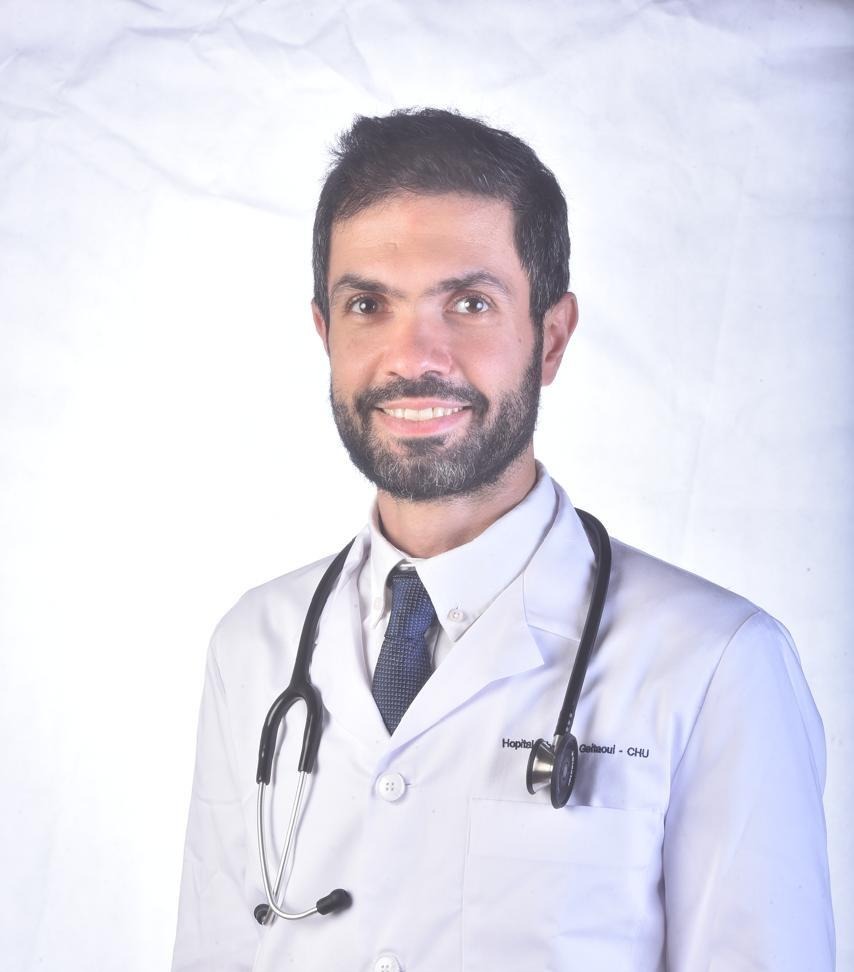
Dr. Mohamad Yazbeck

× Home About Me Services Contact Me
Dr. Mohamad Yazbeck

About Me

Dr. Mohamad Yazbeck is a skilled neurosurgeon with advanced training in France and over a decade of clinical experience. His practice focuses on complex brain and spine surgeries, with a special emphasis on preserving critical neurological functions. He integrates cutting-edge techniques such as awake craniotomy and MRI tractography, and is an active contributor to neurosurgical research through publications on rare conditions and advanced procedures. Dr. Yazbeck is known for combining scientific precision with compassionate, patient-centered care.

calendar Education

calendar 2021–2022

Diplôme Universitaire d’Imagerie Neurovasculaire Diagnostique et Thérapeutique-University of Paris Cité, France

Dr. Mohamad Yazbeck obtained a University Diploma in Diagnostic and Therapeutic Neurovascular Imaging from the prestigious Université Paris Cité in France. This specialized certification, awarded for the academic year 2021–2022, demonstrates advanced expertise in both imaging and intervention techniques for neurovascular conditions. It reflects Dr. Yazbeck’s commitment to mastering cutting-edge technologies used in diagnosing and treating complex brain and vascular disorders.

calendar 2021–2022

Attestation de Réussite au Diplôme Universitaire en Imagerie Thérapeutique et Diagnostic Neurovasculaire

In 2022, Dr. Mohamad Yazbeck was awarded this advanced university diploma, recognizing his successful completion of specialized training in neurovascular imaging. This qualification highlights his expertise in both the diagnosis and interventional treatment of neurovascular conditions through cutting-edge medical imaging technologies. It underscores his commitment to excellence in modern neurosurgical and diagnostic practices.

calendar 2021–2022

The Specialization Certificate in Neurosurgery-Lebanese University

For Dr. Mohamad Yazbeck, this certification confirms his recognized competence as a specialist neurosurgeon, trained to deliver high-standard care in both elective and emergency neurosurgical settings.

calendar 2019-2018

Microsurgery Diploma – Saint Joseph University of Beirut

This diploma certifies Dr. Mohamad Yazbeck’s specialized training in microsurgery, a highly precise discipline used to operate on delicate anatomical structures such as nerves, blood vessels, and the brain. Obtained from Saint Joseph University of Beirut, this qualification reflects advanced proficiency in microscope-assisted surgical techniques, which are essential in neurosurgery and reconstructive surgery.

calendar 2018-2017

Master of Science–Research, Lebanese University (Faclty of Medical Sciences)

This Master’s degree highlights Dr. Mohamad Yazbeck’s academic foundation in medical research, earned from the Faculty of Medical Sciences at the Lebanese University

calendar 2016–2015

Doctor of Medicine (M.D.) – Lebanese University

Dr. Mohamad Yazbeck earned his medical degree from the Lebanese University, one of the most prestigious public institutions in Lebanon. His education provided a strong foundation in clinical sciences and patient care, setting the stage for his specialization in neurosurgery. During his studies, he demonstrated academic excellence, surgical precision, and a passion for neurological health.

Published over 21+ Research papers on Research Gate

Aqueductal stenosis causes hydrocephalus by blocking CSF flow, increasing brain pressure. VP shunts and ETV are main treatments, but each has limitations. New methods like neuronavigation and robotic endoscopy are improving outcomes. This review explores surgical advances and long-term management strategies.
Atypical teratoid/rhabdoid tumor (ATRT) is a rare, aggressive brain tumor in very young children. This case details a 2-year-old with infratentorial ATRT successfully treated with surgery and chemotherapy. Despite early progression, a second surgery achieved full resection, and the child remains symptom-free after four years. The case highlights the need for early diagnosis, aggressive therapy, and close follow-up for better outcomes.
This study assessed outcomes of Rolandic cortex glioma resections in 40 patients over 10 years. Gross total resection (GTR) was linked to improved motor function, daily activity, and quality of life. Despite a 20% recurrence rate, 1-year survival was 92.5%, and functional recovery was common. Awake craniotomy and stimulation mapping proved effective for safe resection in eloquent brain areas.
This case highlights the successful removal of a trigeminal V3 schwannoma extending into the pterygopalatine and infratemporal fossae using a combined endoscopic endonasal and transgingival transmaxillary approach. The technique provided optimal access to lateral and inferior tumor areas, improved surgical handling, and minimized aesthetic and stomatological complications. Postoperative outcomes were excellent, with complete tumor resection, resolution of neuralgia, and no recurrence during follow-up.
This case presents the first known instance of an 11-year-old with both Down syndrome and undiagnosed Dandy-Walker syndrome, a highly rare combination with only four previous cases reported—all in infants. The patient developed acute intracranial hypertension due to hydrocephalus from a Dandy-Walker malformation. A ventriculo-cysto-peritoneal shunt was successfully used to relieve pressure. This case highlights that even in asymptomatic older children, hydrocephalus from Dandy-Walker can emerge and be effectively treated.